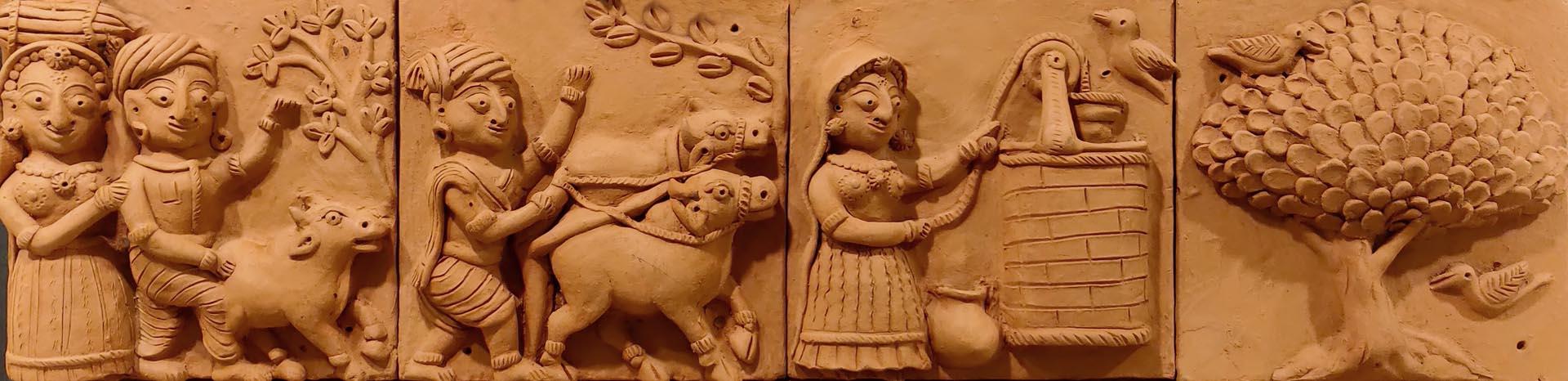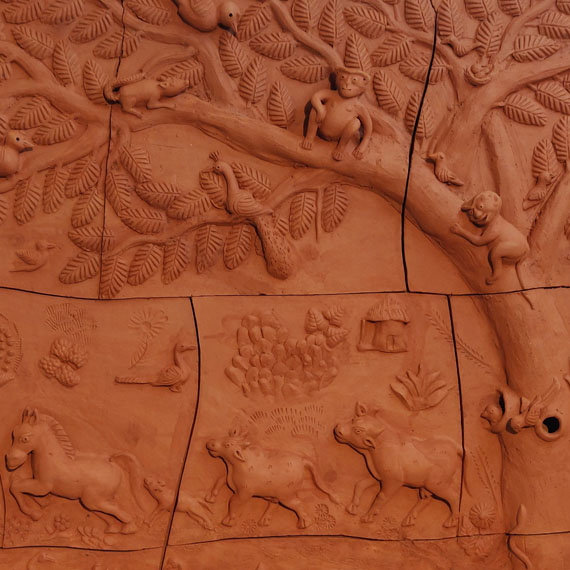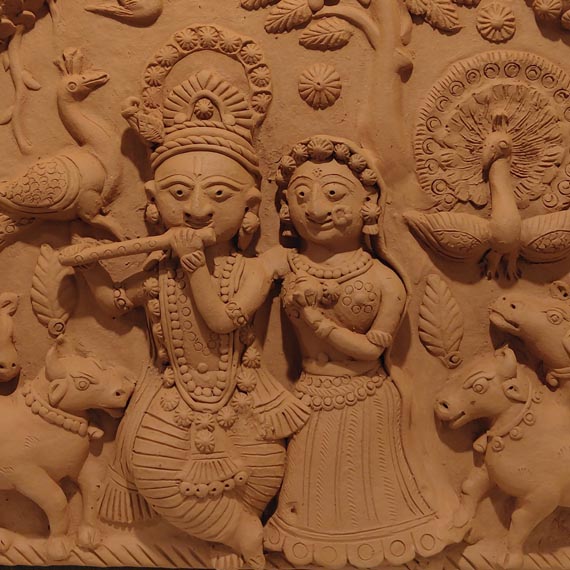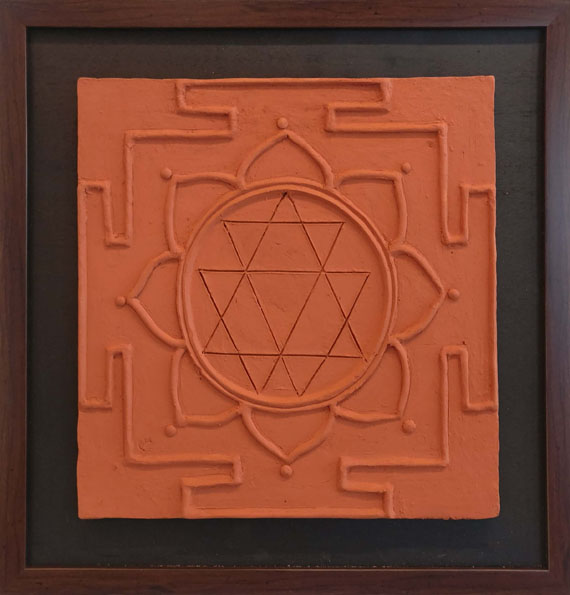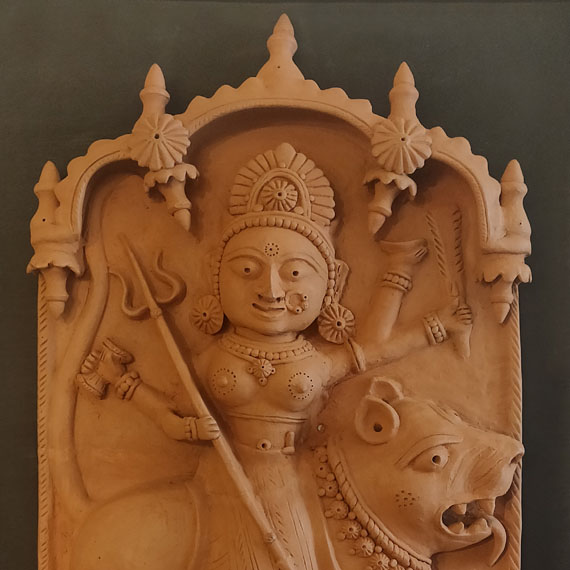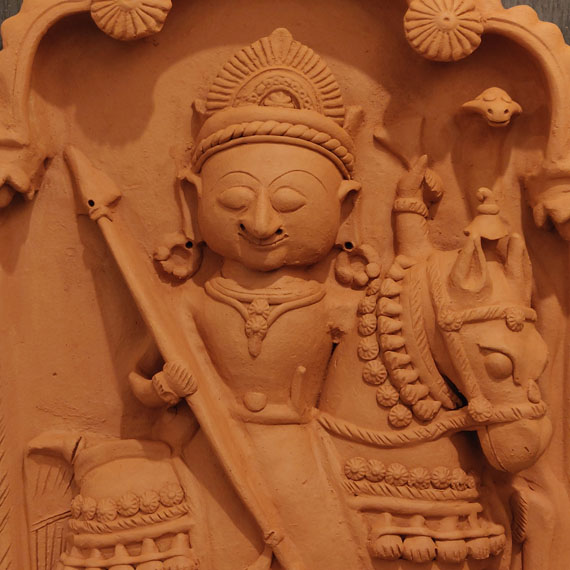

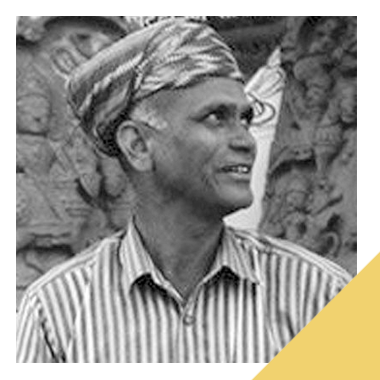
Based in the town of Molela near Nathadwara in Southern Rajasthan, Jamna Lal Kumhar (b. 1967) is a traditional terracotta potter, known for creating clay relief sculptures depicting images of tribal gods and mythic heroes on large, dome topped plaques.
Many Western Indian tribal communities commission Hindu potters to create images of deities which are used in their rituals and as shrine offerings. As most tribes do not fire clay or use the potter’s wheel, this dependence has created a close symbiotic relationship between tribal patrons and specialist potters. Amongst the most significant are the potters of Molela, which has long been a major centre for sacred terracotta production.
Once a year, in the month of Magha (January – February) members of tribal communities, specifically the Bhils, Gujars, and the Garijats travel to Molela accompanied by their priest to commission relief plaques depicting their local gods, goddesses, and legendary heroes. Once purchased, the plaques are ritually transported back to the village, ceremonially introduced to the community, and installed in shrines as village guardians and protectors.
The potters consider their craft sacred and deeply tied to Molela, believing that the images would lose their sacrality or even break if created elsewhere. Clay is gathered from the nearby banks of the Banas River, and mixed according to traditional practice. The plaques are created entirely by hand, without moulds, formed into hollow, dome-topped reliefs, dried, and fired in temporary kilns. After firing, some images are painted using a traditional sequence of natural organic and mineral pigments moving from light to dark shades. Decorated with silver leaf the painted surface is coated with a lacquer known locally as jalla to give it a polished sheen.
Jamna Lal works within the traditional Molela potters’ repertoire, portraying a range of tribal deities. Equestrian deities such as Dharmaraj and Sanvaro Babo, who are believed to protect against malevolent spirits, misfortune, and ancestral ghosts, and numerous local goddesses each distinguished by specific attributes and mounts form part of his oeuvre. Besides these plaques, Jamna Lal sculpts three dimensional figures of the goddess Gauri and her consort Isar to be sold to Hindus throughout the Mewar region for use in the Gangaur festival.
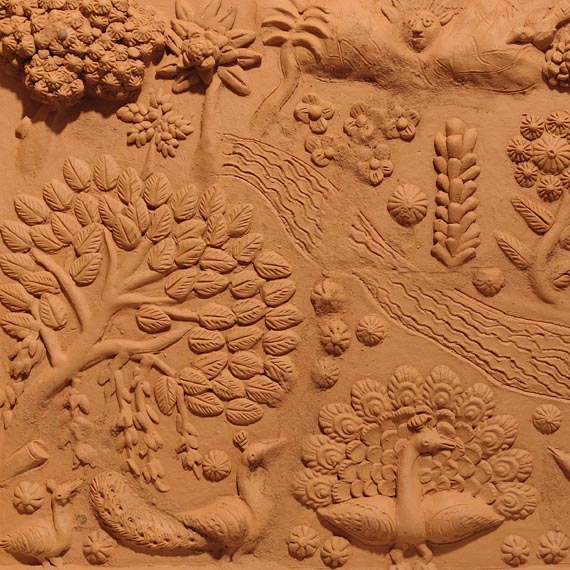
Although Jamna Lal continues to serve his traditional role as a creator of sacred images for tribal and devotional purposes, he has expanded his practice to include large non-votive works for exhibitions and design projects. His repertoire includes genre scenes, elaborate panels depicting the Hindu pantheon as well as decorative plaques for aesthetic display. His modelling demonstrates remarkable precision, with forms and shapes carefully accentuated to bring a lifelike quality to the clay. Even in these larger, more artistic pieces, Jamna Lal maintains the mastery of technique refined through the Molela tradition, skilfully manipulating the clay to achieve intricate details, dynamic compositions, and a sense of depth that elevates his work beyond mere replication of traditional motifs.
Jamna Lal has been awarded the Rajasthan State Award (1988) and the National Award (2013). Besides conducting numerous workshops in India and internationally, his work has been has been exhibited in India, as well as in the Czech Republic and Finland. His works form part of private as well as museum collections, notably the CSMVS, Mumbai.
Bibliography –
Chauduri, Pritish. 2011. “Brief Communication: A Cursory Look into the Terracotta Objects of Molela – a Rajasthan Village.” Journal of the Anthropological Surevy of India 321-324.
Huyler, Stephen P. 1991. “The Production and Use of Ritual Terracottas in India.” Thesis for Doctor of Philosophy. London: The School of Oriental and African Studies, University of London.